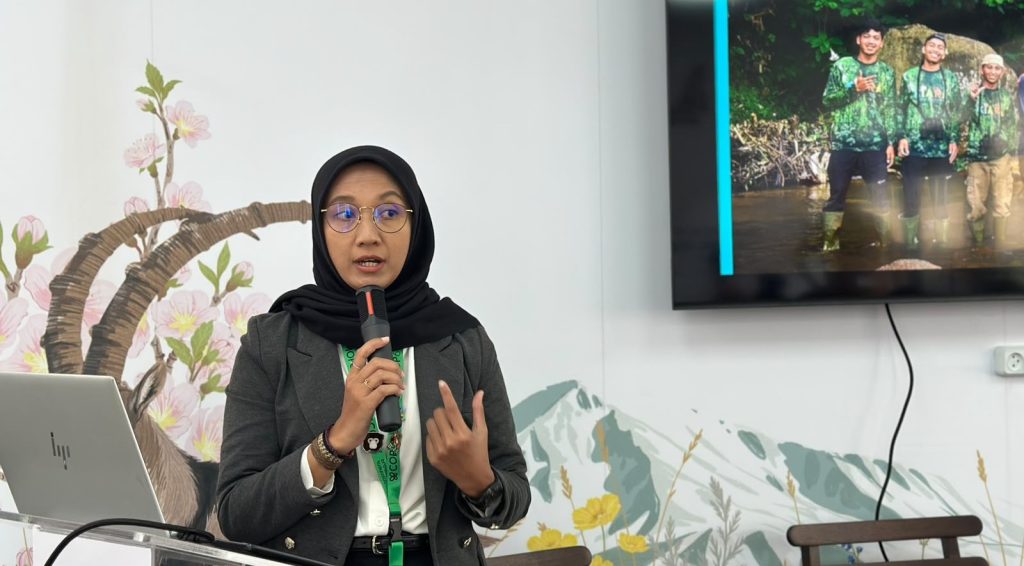
What Happens After We Leave COP?
Reflections from a local conservation leader on participation, funding, and the gap between global commitments and everyday conservation.
My first impression of COP17? Intimidating.
Around 9,400 participants. A published program listing nearly 300 Blue Zone side events, alongside negotiations, pavilion discussions, and other gatherings. Before I had even packed my bag, I spent several days trying to work out where I could contribute, what I wanted to learn, and how to make the most of being there.
For someone working in a local conservation effort, stepping into a global policy arena felt like entering unfamiliar territory. But by the end of my week in Yerevan, I felt more certain of something: the experiences of local conservation organizations belong in these conversations. We have knowledge to share, questions to ask, and perspectives that global discussions need.
COP stands for Conference of the Parties. In this case, it brings together governments that are Parties to the Convention on Biological Diversity, alongside observers, scientists, civil society, and others working on biodiversity. COP17 took place in Yerevan, Armenia, in October 2026. It was scheduled for 19–30 October, with negotiations continuing into 31 October. I attended the first week, thanks to Synchronicity Earth, which supported KIARA and other partners in participating.
There were two main spaces. The Green Zone welcomed the public through exhibitions, conversations, and activities about biodiversity and living with nature. The Blue Zone required accreditation and a special badge. This was where the formal negotiations, diplomatic meetings, and many side events took place.
Walking into the Blue Zone felt like entering another world. First, though, there was airport-style security. My backpack was practically my mobile office. Every day, my laptop came out for screening and went back in again. A small routine, but one I quickly became familiar with. With diplomats and government delegations arriving from around the world, the security procedures were understandable. Still, somewhere between the security checks and the meeting rooms, I would look around and think, “Wow, I’m really here.”
Then came the challenge of finding the right room. With so many parallel events, navigating COP sometimes felt like finding my way through a maze. Fortunately, the young Armenian volunteers were incredibly helpful, from our arrival at Zvartnots Airport to the conference venue itself. Their warmth made an overwhelming event feel a little more manageable.
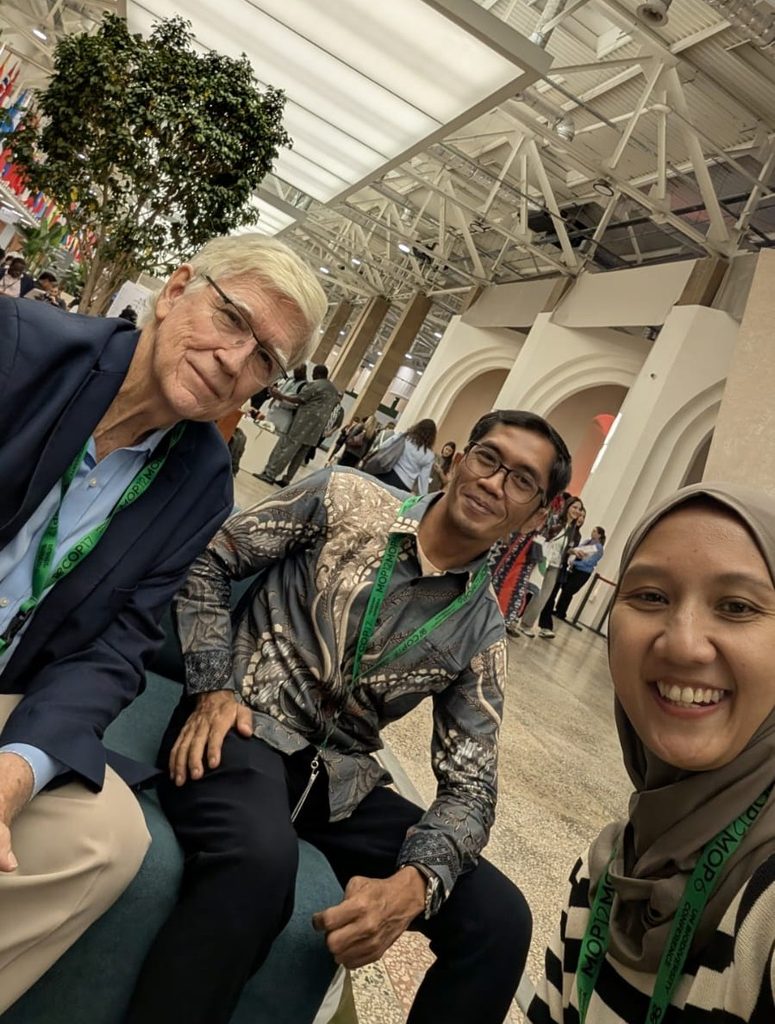
Between sessions, I also found familiar connections in unexpected places. Through Synchronicity Earth, I met fellow Indonesian partner Pak Joko Guntoro from SatuCita Foundation. We were already in the same Indonesian IUCN species specialist network but had never properly spoken. He works with turtles; I work with primates. Apparently, we needed to travel to Armenia to finally say hello. I also met colleagues from HUTAN, a conservation NGO based in Sabah, and it was lovely to know we would see each other again so soon at the Asian Primate Symposium there later in November!
I was also encouraged to see Indonesian civil society colleagues, including Forest Watch Indonesia, Yayasan Madani Berkelanjutan, and Satya Bumi, bringing their concerns into these spaces. Among the issues being discussed were the rights and meaningful participation of Indigenous Peoples and local communities. Watching colleagues do this advocacy reminded me how much persistence it takes to make sure these voices are heard.
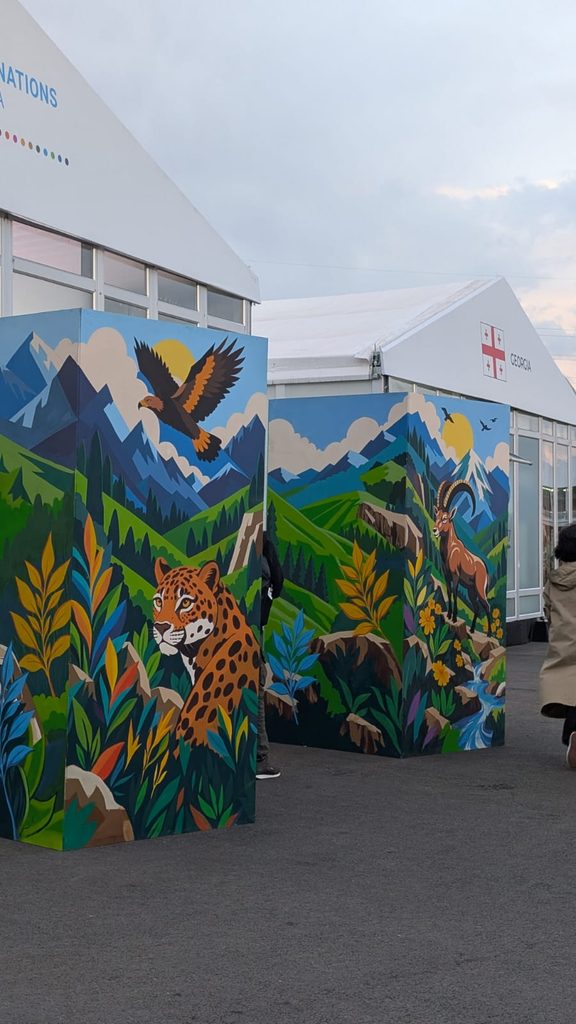
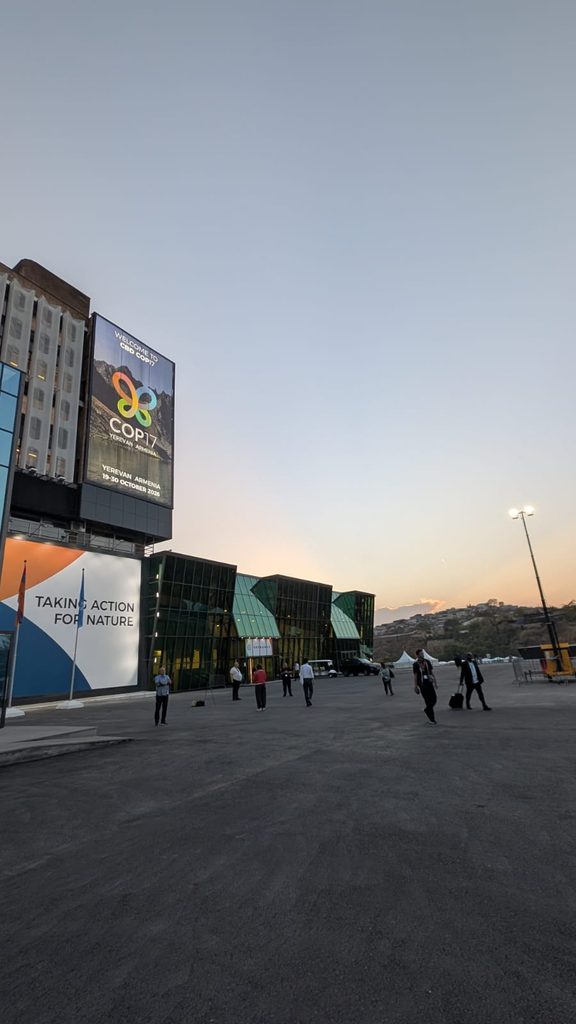
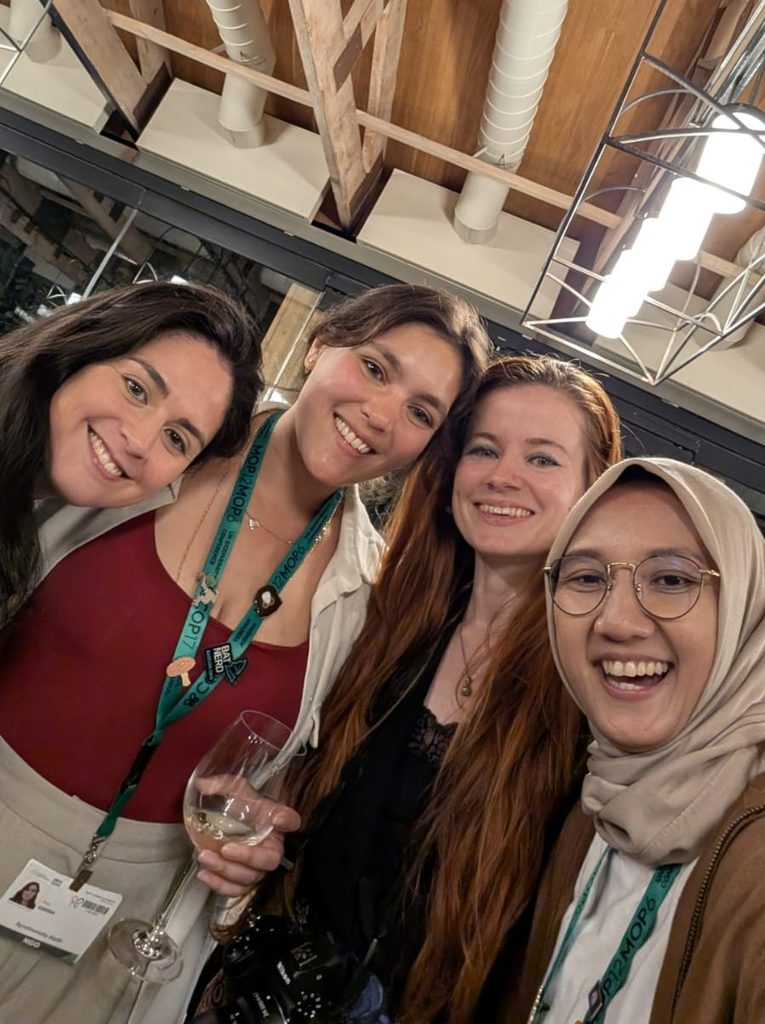
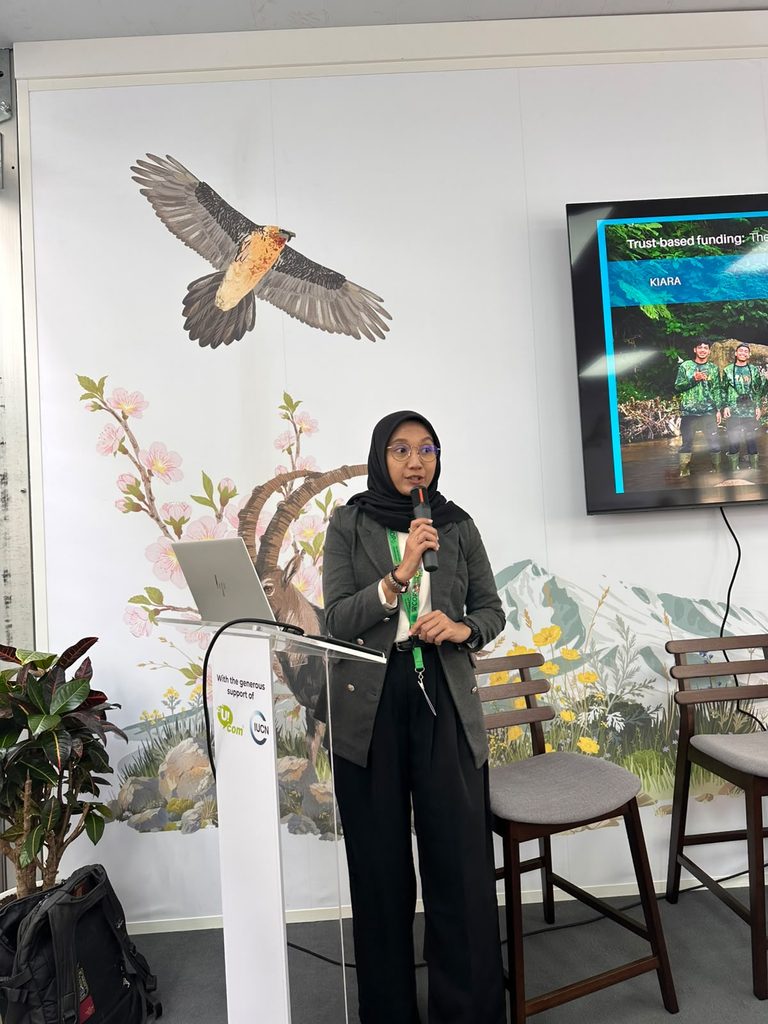
My own week itself centred on three panel discussions, each connected to something we experience through KIARA.
The first explored funding for youth-led biodiversity action and the ideas in Ecologies of Empowerment: Why and how to fund youth-led biodiversity action, a report developed by Synchronicity Earth and partners. The discussion considered how better support for young people could help deliver the Kunming–Montreal Global Biodiversity Framework. For me, this was closely connected to the young people who work with KIARA, and to a question we need to take seriously: can they afford to build a life in conservation? Passion can bring someone into this field. Staying requires fair pay, opportunities to learn, support through difficult moments, and room to take responsibility. The message I wanted to share was that we need to make conservation a career that people can afford to pursue. It is not only about bringing young people into conservation. It is about helping them stay, grow, and lead. Inviting young people into a room is a beginning. Giving them the resources, trust, and space to shape what happens next takes a longer commitment. I may be outside the age brackets of many youth programs now, but young at heart still counts, right? ;). More seriously, I see my role increasingly as helping create opportunities for younger colleagues to lead.
The second panel, Building Trust for Biodiversity: Reimagining Funding Relationships for Higher Conservation Impact, brought me into a conversation with Synchronicity Earth and IUCN Netherlands about something many local organizations know very well: the difficulty of funding the organization behind the project. There are grants for activities, surveys, workshops, and reports. Finding support for salaries, staff development, administration, and the everyday systems that keep an organization functioning can be much harder. Yet these are the foundations that make those activities possible. Relationships with communities take time. Experienced field teams need continuity. Young staff need mentoring. Someone needs to manage the accounts, coordinate the work, and make sure the organization can meet its responsibilities. From my perspective as the leader of a locally led conservation organization, trust-based funding means being treated as a partner. It means having the flexibility to make informed decisions, invest in our people, and build a stronger organization for long-term conservation.
I found it encouraging to hear funders questioning established ways of working and discussing how to share power and trust local partners’ judgement. I would welcome more of this across conservation funding. There is often concern about the risk of supporting a small organization. We also need to consider the risk of leaving dedicated teams without the resources to sustain their work.
My third panel brought the conversation back to the forests of Java. Russ Mittermeier, Chief Conservation Officer at Re:wild and Chair of the IUCN SSC Primate Specialist Group, invited me to join Biodiversity Hotspots at 25: Prioritizing Conservation Action and Investment under the Global Biodiversity Framework. The discussion included representatives from the Bezos Earth Fund, Hempel Foundation, and Critical Ecosystem Partnership Fund, alongside perspectives from biodiversity-rich countries. I was glad to share the panel with Rita Mesquita from Brazil and Fanny Cornejo from Yunkawasi in Peru. For me, this was an opportunity to bring Java into the conversation.
When we talk about Sundaland, much of the global attention goes to Borneo and Sumatra, their tropical forests, and their iconic species. These landscapes are indeed critically important. I wanted to draw attention to the extraordinary biodiversity that remains on Java, too. Java is one of the most densely populated islands in the world. Much of its forest has been converted or fragmented. Yet its remaining forests are still home to species found nowhere else, including the endangered Javan gibbon. For me, Java offers an important lesson: even within a globally recognized biodiversity hotspot, some landscapes and populations can remain overlooked. A gibbon population may still be present while facing an increasingly uncertain future. Forest fragments can become isolated. Human infrastructure can create new dangers. And wildlife does not recognize the administrative boundaries on our maps. At KIARA, our work reminds us to look beyond protected areas, too. The forests and mixed-use landscapes outside them matter to the animals living there and to the people sharing those places. I wanted others in the room to see these remaining habitats as places where conservation is still possible, urgent, and worth supporting.
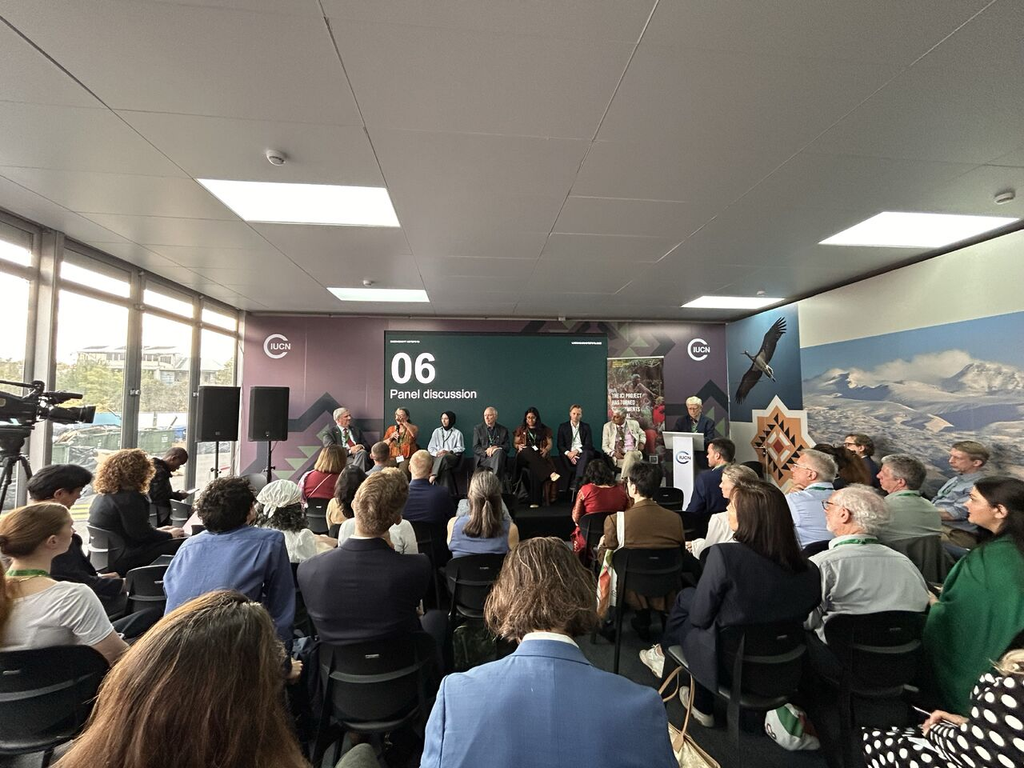
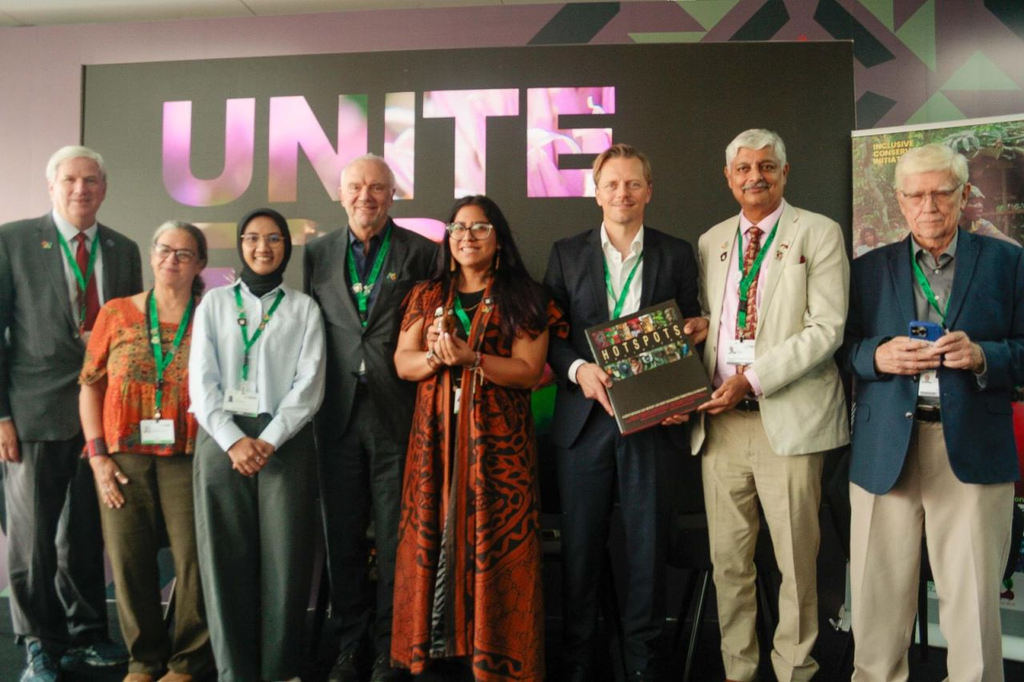
Across the three panels, I could bring local experience into discussions about wildlife, funding, trust, and youth leadership. They also opened the door to conversations afterward, with people who asked questions, shared similar experiences, or wanted to learn more about our work.
I also had the opportunity to meet with Mr. Noer Adi Wardojo from Indonesia’s Ministry of Environment in the evening. I shared my concerns about biodiversity and the importance of actively involving local NGOs in Indonesia’s national biodiversity strategy and action plan. Organizations working on the ground have experience that can help connect national plans with local realities.
I returned from COP with new contacts and ideas, and a stronger sense of responsibility to carry these conversations forward. A panel ends after an hour or so. The relationships, questions, and commitments need attention long after we leave the room.
For colleagues from local organizations who may have the opportunity to attend a global gathering like this, here are a few things I would pass on from my first experience.
- Find your priorities before you travel. Think of a scientific conference, then imagine it on a much larger scale. Read the program, choose the discussions most relevant to your work, and check where they take place. Leave some space for unexpected conversations. You cannot be everywhere, and you do not need to be.
- Let people know who you are and what you do. It is easy to disappear into a crowd this large. Introduce yourself. Ask a question. Approach a speaker whose work connects with yours. Some of my most useful conversations happened after a session had officially ended. And if English is your second language, give yourself credit. You are bringing your experience into an international conversation in another language. Your accent does not make your knowledge less valuable.
- Hydrate and give yourself a break. Yes, hydrate! The energy of COP can carry you from one room to the next until you realize you have barely stopped. Drink water, eat, and take a breath. There is a lot to absorb.
- Bring your local realities into the room. Explain what a global target means in the places where you work. Share what is succeeding, what is difficult, and what support is missing. A specific experience can help someone understand an issue that otherwise remains abstract.
- Keep the conversation going when you return. Follow up with the people you met. Share what you learned with your team. Consider which ideas are useful for your organization and which connections might grow into meaningful collaboration.
- Take time to walk and explore. Visiting another country is a privilege, too. I enjoyed walking to the venue and taking in the city along the way. It reminded me how much clean, welcoming, and accessible public spaces contribute to our well-being. Leave a little room in your schedule to experience the place beyond the conference.
Attending COP is a privilege. Travel, funding, accreditation, and time away from ongoing responsibilities are barriers that many local organizations face. I am grateful to Synchronicity Earth for making KIARA’s participation possible and creating space for us to contribute. That opportunity comes with a responsibility to make visible the work, knowledge, and concerns of the places we come from.
To fellow local conservation organizations: the experience you carry matters. The years spent monitoring a species, earning trust, supporting colleagues, and working through difficult decisions give you something valuable to contribute. I hope that the conversations we began in those meeting rooms will help strengthen the people and organizations carrying it forward.